
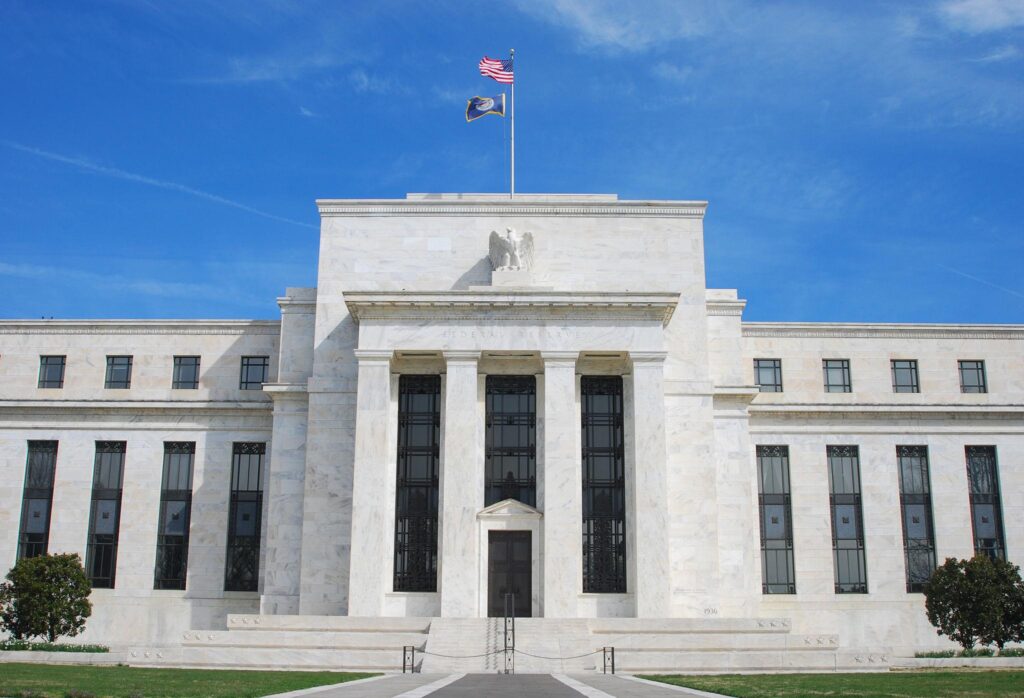

Why a New Fed Chairman Often Creates Stock Market Volatility
Whenever a new Federal Reserve chairman takes office, markets pay close attention.
The Federal Reserve influences:
- Interest rates
- Inflation expectations
- Economic growth
- Bond yields
- Liquidity conditions
Of the last 13 Fed chairmen elected, in 10 of those years, the stock market experienced a pullback. Transitions in Fed leadership often create uncertainty for investors.
Historically, the stock market has frequently experienced volatility following the appointment of a new Fed chair. In fact, market studies and historical analyses show that many new Fed chair transitions have been followed by stock market pullbacks or corrections within the first year.
Today, investors face an especially tense environment surrounding the new Fed chairman due to:
- Ongoing war tensions involving Iran
- Elevated oil prices
- Inflation concerns
- Questions surrounding future interest rate policy
Understanding the relationship between the New Fed Chairman, Mr. Kevin Warsh, and Stock Market Volatility can help investors maintain perspective during uncertain periods.
Why Markets React to New Federal Reserve Leadership
A new Fed chairman introduces uncertainty around:
- Interest rate policy
- Inflation priorities
- Balance sheet management
- Economic intervention strategy
According to recent market analysis, investors are closely watching new Fed Chair Kevin Warsh for signals regarding inflation and future monetary policy.
Kevin Warsh is generally viewed as more market-oriented and potentially more willing to reduce regulation and cut interest rates faster if economic growth weakens, while Jerome Powell has taken a more cautious, data-dependent approach focused heavily on controlling inflation even if rates remain elevated longer.
Warsh is also perceived as somewhat more critical of prolonged quantitative easing and large Federal Reserve balance sheet expansion compared to Powell’s historically more accommodative pandemic-era policies.
Historically, many Fed chair transitions have coincided with increased market volatility or corrections within the first year. Some research has shown average pullbacks exceeding 10% during transition periods, although the causes are often broader than the Fed chair alone.
Importantly, correlation does not necessarily mean causation.
Policy Uncertainty Often Matters More Than the Chairman Himself
Markets typically react less to the individual person and more to uncertainty surrounding future policy.
Right now, investors are trying to determine:
- Will interest rates remain elevated?
- Will inflation remain stubborn?
- Will oil prices continue rising?
- Will the Fed prioritize growth or inflation control?
These questions create volatility because markets attempt to price future expectations in real time.
The Federal Reserve plays a central role in shaping borrowing costs and liquidity conditions across the economy.
War With Iran Adds Another Layer of Uncertainty
The current geopolitical tensions involving Iran further complicate the environment.
Conflict in the Middle East often raises concerns surrounding:
- Oil supply disruptions
- Shipping routes through the Strait of Hormuz
- Energy inflation
- Consumer spending pressure
Higher oil prices can influence inflation expectations because energy impacts transportation, manufacturing, and shipping costs across the economy.
This creates additional pressure on the Fed because persistent inflation may limit its ability to reduce interest rates.
Reuters and MarketWatch recently noted that oil prices and inflation concerns are among the first major tests facing the new Fed chairman.
Corrections Are Normal in Long-Term Investing
A 10% market correction feels uncomfortable, but historically, corrections are relatively common.
Research and historical market data show:
- 10% corrections occur regularly
- Pullbacks are part of normal market behavior
- Long-term markets have historically recovered over time
According to historical analysis, stock market corrections have occurred roughly once every couple of years on average.
Volatility surrounding a new Fed chairman does not necessarily mean long-term market fundamentals have permanently changed.
Why Long-Term Investors Should Maintain Perspective
Investors often make mistakes during periods of uncertainty by:
- Selling emotionally
- Trying to time markets
- Overreacting to headlines
Historically, markets have navigated:
- Wars
- Inflation cycles
- Recessions
- Fed transitions
- Oil shocks
while continuing long-term growth over decades.
The key challenge is not eliminating volatility — it is maintaining discipline through uncertainty.
Sources
MarketWatch. New Fed chair and oil shock analysis.
Reuters. Federal Reserve and market uncertainty reporting.
Fisher Investments. Historical Fed chair market pullback analysis.
Investing.com. Historical market corrections during Fed transitions.